Transport guide
Shenzhen Metro Guide: Map, Fares, Hours and Payment
Plan a Shenzhen Metro journey with the official map and timetable, fare rules, airport and border routes, and payment options for visitors.
- Published
- Updated
- Last verified
- Reading time
- 10 minutes
- Best first-trip option
- A supported contactless international bank card or a single-journey ticket
- Ordinary fare
- RMB 2 for the first 4 km, then distance-based increments
- Operating hours
- First and last trains vary by line, direction and station; use the official timetable
- Keep ready
- Your destination in Chinese, exit number and a backup payment method
The Shenzhen Metro is the simplest way to reach most central districts, railway stations, border checkpoints and the airport. Before entering, check the official English metro map, save the line direction and exit number, then tap a supported contactless international bank card or buy a single-journey ticket. Since 10 September 2026, eligible international contactless cards have been accepted at every gate across the network, but you should still carry a backup.
Shenzhen Metro at a glance
- Map: use the official interactive map linked above; take a screenshot if you may lose data underground.
- Fare: ordinary-class journeys start at RMB 2 for the first 4 km, then rise in distance-based steps.
- Hours: there is no single network-wide first or last train time; check the official timetable for the line, direction and station.
- Visitor payment: a supported contactless international card is usually the fastest option; a single-journey ticket is the clearest fallback.
- Language: major signs, platform directions and onboard announcements include English, but destination names in Chinese still help.
Plan the route before entering
- Find the nearest station to your actual destination—not only the district name.
- Note the line number, direction or terminal station, transfer station, and exit number.
- Check the route again on the official Shenzhen Metro map because lines and station arrangements can change.
- Take a screenshot if you may lose mobile data underground.
English appears on station signs and announcements, but keeping the Chinese station name visible makes it easier to ask staff or confirm a ride-hailing pickup. For more route-planning context, see the transport guide hub.
Check fares and operating hours
Shenzhen Metro uses one distance-based ordinary-class fare policy across the network:
- RMB 2 covers the first 4 km;
- add RMB 1 for each 4 km from 4–12 km;
- add RMB 1 for each 6 km from 12–24 km; and
- beyond 24 km, add RMB 1 for each additional 8 km.
The route planner and station display show the fare for a specific journey. Line 11 also has a separate Business Class option; check the validator and current fare before using it.
First and last train times vary by line, travel direction and station, and a late border closing time does not mean the connecting metro is still running. Use Shenzhen Metro’s official first-and-last-train timetable on the day of a time-sensitive journey.
Useful airport, railway and border connections
| Destination | Metro connection |
|---|---|
| Shenzhen Bao’an International Airport (深圳宝安国际机场) | Airport Station (机场站) on Line 11 |
| Shenzhen North Railway Station (深圳北站) | Shenzhen North Station (深圳北站) on Lines 4, 5 and 6 |
| Futian Railway Station (福田站) | Futian Station (福田站) on Lines 2, 3 and 11 |
| Shenzhen Railway Station (深圳站) / Luohu Port (罗湖口岸) | Luohu Station (罗湖站) on Line 1 |
| Futian Port (福田口岸) | Futian Checkpoint Station (福田口岸站) on Lines 4 and 10 |
| Shenzhen Bay Checkpoint (深圳湾口岸) | Shenzhen Bay Checkpoint Station (深圳湾口岸站) on Line 13 |
| Liantang Checkpoint (莲塘口岸) | Liantang Checkpoint Station (莲塘口岸站) on Lines 2 and 8 |
| Huaqiangbei electronics district (华强北) | Huaqiang North Station (华强北站) on Lines 2 and 7, or Huaqiang Road Station (华强路站) on Line 1 |
Station names can refer to a railway station, neighbourhood or checkpoint, so confirm the exact destination rather than choosing the closest-looking English name. Save the Chinese characters shown in the table: they are easier to match in a Mainland map app or show to station staff. If arriving from Hong Kong, compare the endpoints in the Hong Kong to Shenzhen route guide.
Choose a payment method
Single-journey ticket
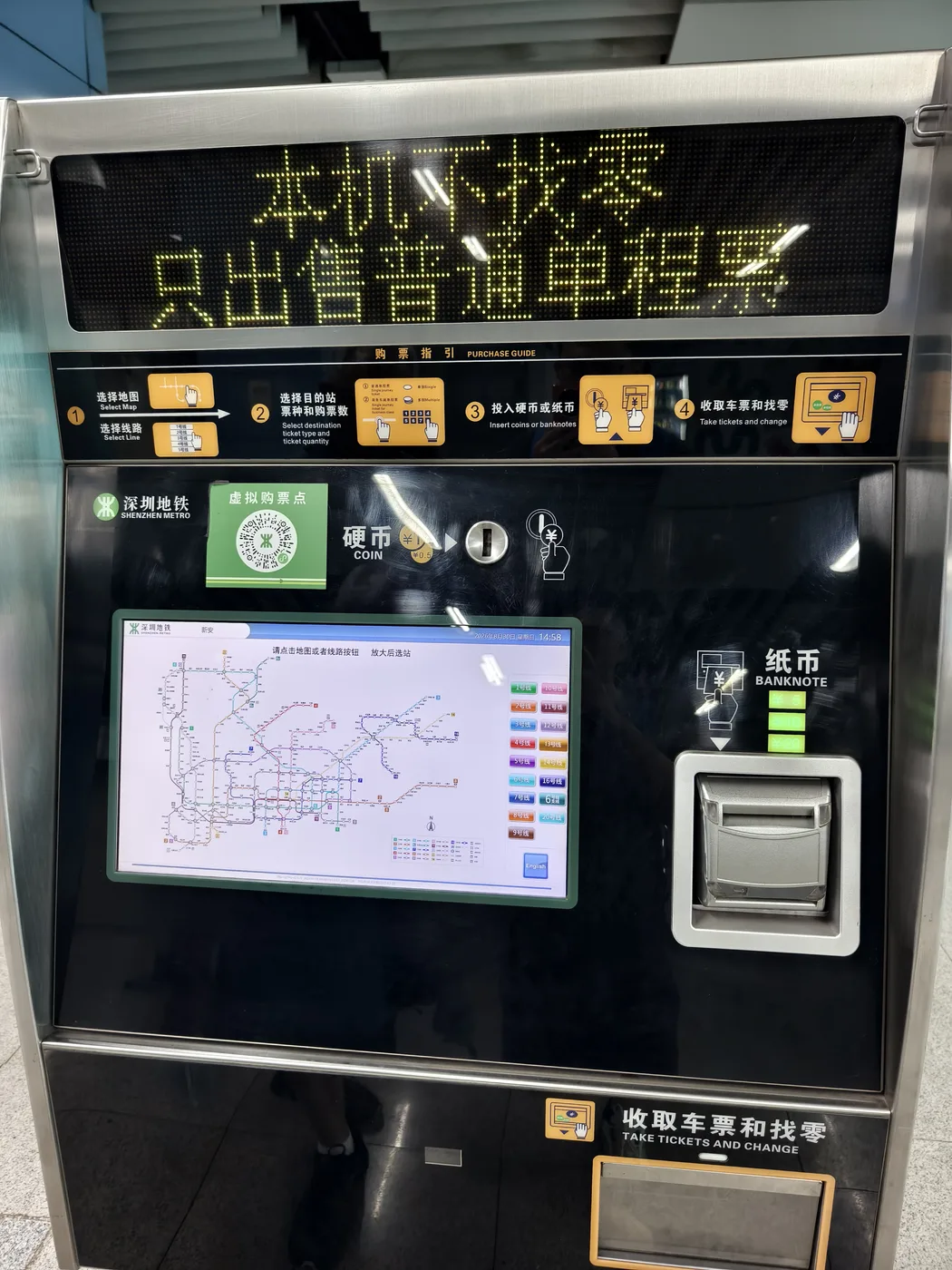
This is the most understandable fallback for an occasional rider. Select the destination at the ticket machine if the machine is operating and supports your payment method. If it does not, go to the staffed customer service centre. Keep the token or ticket until you exit; the gate normally collects a single-journey token at the end.
Contactless international bank card or mobile wallet
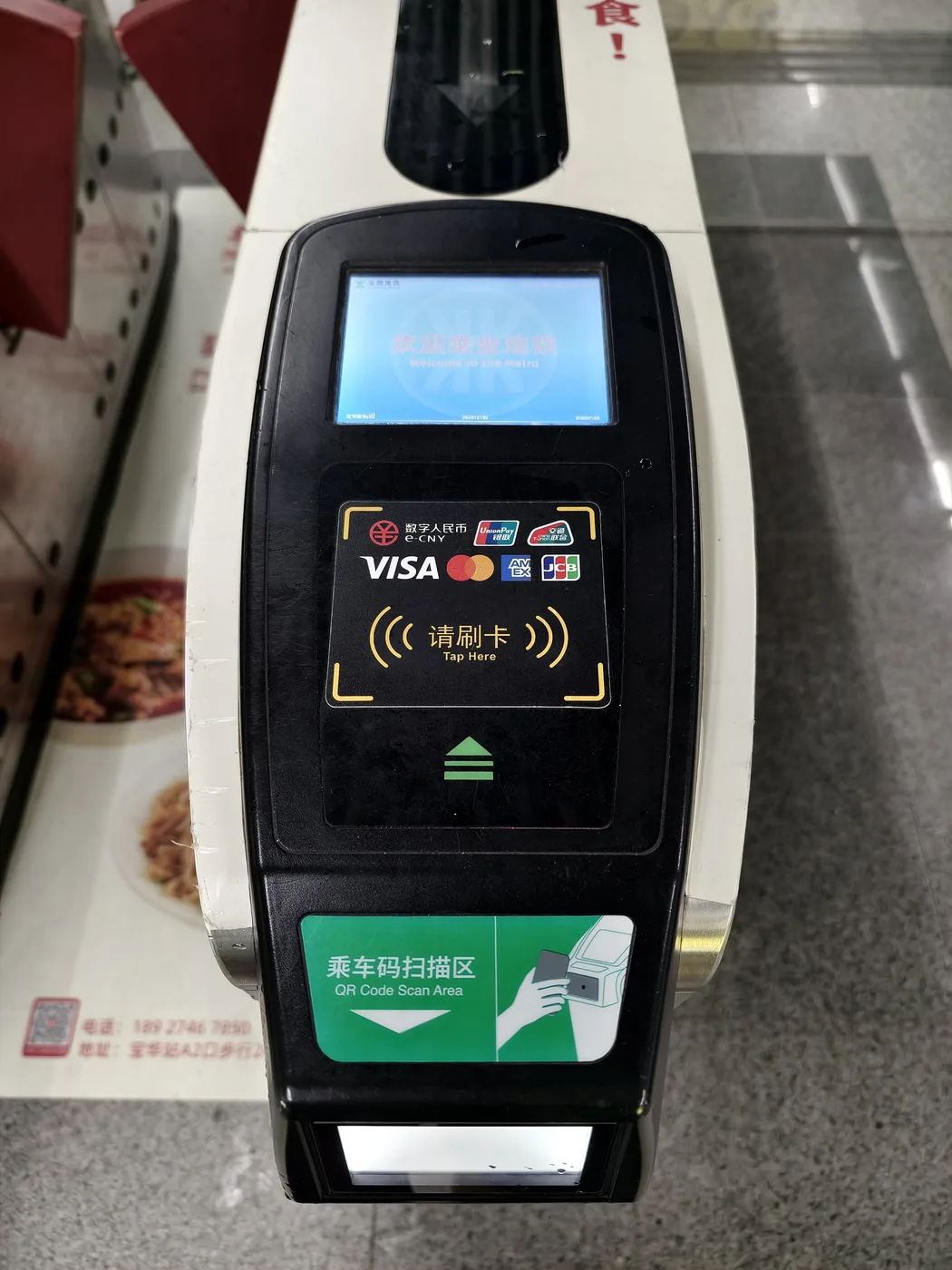
Shenzhen Metro says every gate, station ticket-processing machine and Line 11 Business Class validator now accepts supported international cards. The listed networks are UnionPay, Visa, Mastercard, American Express and JCB. The physical card must support contactless payment and have low-value contactless transactions enabled; a mobile device carrying an eligible card can also work.
Tap the same physical card or mobile device at entry and exit. A card being on the supported list does not guarantee issuer approval, so read the gate message and keep a second payment method ready. Metro QR products—including Shenzhen Metro, Shenzhen Tong and Tencent transit codes—remain separate enrolment-based options. For shops and services beyond the metro, see the cross-border payment guide.
Shenzhen Tong
A Shenzhen Tong card can be convenient for repeated metro and bus travel. The official fare policy describes a discount for qualifying Shenzhen Tong products, while some QR and non-local card methods do not receive the same discount. Before buying or topping up a card, confirm current sale, refund and recharge arrangements with station staff or Shenzhen Tong.
Enter, transfer and exit
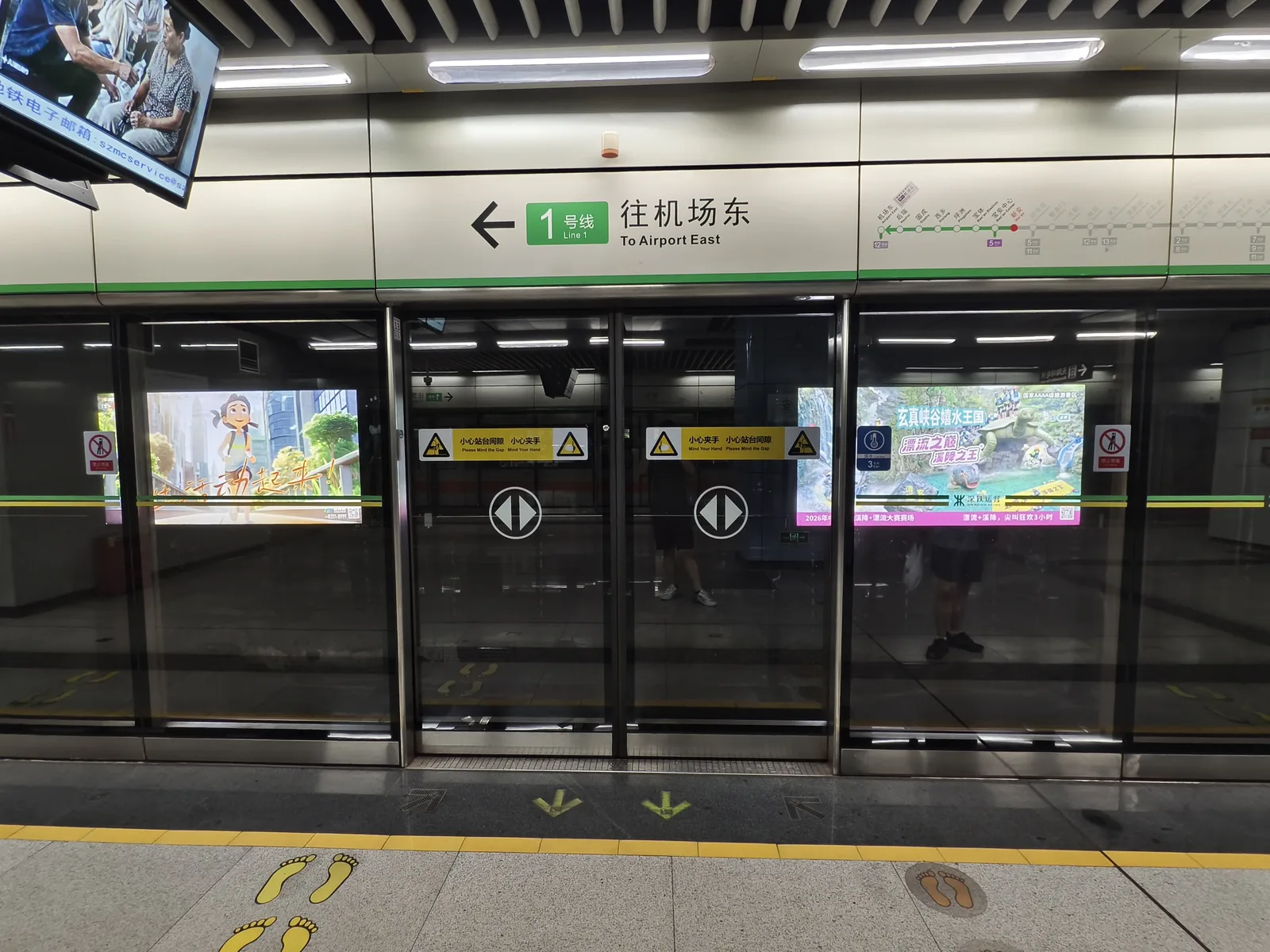
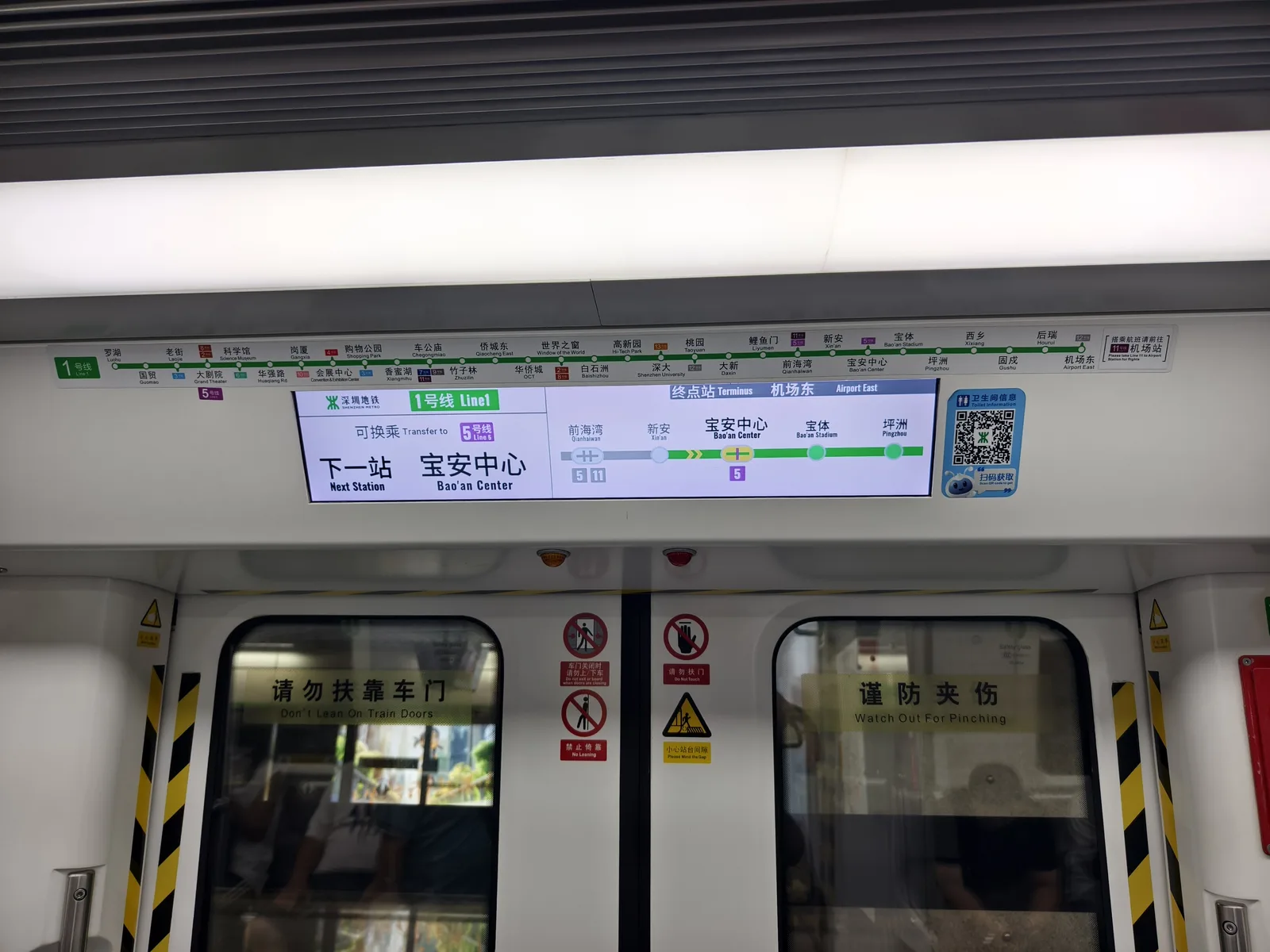
At the gate, tap or scan once and wait for it to open. Inside the paid area, follow the line number and the terminal station shown for your direction. At an interchange, follow Transfer signs before heading towards an exit.
On the platform, queue beside the door markings and let passengers leave first. Keep bags clear of closing doors. When you arrive, follow the saved exit number. If you leave through the wrong exit, crossing a large road or complex above ground can add significant walking time.
If something goes wrong
Go to the customer service centre before repeatedly tapping or scanning. Show staff:
- the station or destination name in Chinese;
- the ticket, card, phone or QR screen used to enter;
- any error message; and
- a translation app if needed.
Common recoverable problems include choosing insufficient value, using a different device at exit, losing a single-journey token, or staying inside the paid area unusually long. Staff can check the journey and tell you the current resolution and any applicable fare.
First metro trip checklist
- Save the destination and exit number in Chinese
- Check the line direction and transfer station
- Carry two workable payment methods
- Use the same ticket, card or device at entry and exit
- Re-check official information for late-night or time-sensitive travel
What this guide does not promise
This page does not provide live train status, last-train times or a guaranteed list of accepted foreign cards. Those details can change. Use the official links below and station signage for the journey you are making.
Official sources
Use these links to re-check details that may change.
- International bank-card acceptance across the metro networkShenzhen Metro Group · checked 27 Sept 2026
- Ticket and payment typesShenzhen Metro Group · checked 30 Aug 2026
- Basic fare and discount policyShenzhen Metro Group · checked 30 Aug 2026
- Official Shenzhen Metro mapShenzhen Metro Group · checked 27 Sept 2026
- First and last train timetableShenzhen Metro Group · checked 27 Sept 2026